Please note that we do not create all the designs featured in this article. Our primary focus is to curate and collect a diverse range of design collections and products to inspire and share with our audience. While we do not claim ownership or take full credit for the original designs and images, we occasionally make minor adjustments, particularly in home decor and fashion items, to present them more effectively. Additionally, we may produce and edit images to enhance their quality and composition before sharing them on our Pinterest page or website. For the design work we do on these creative designs, we also include our logo on the images shared on Pinterest and our website. This helps our audience recognize that these designs have been published on influencivenews.com
Every braid you have ever admired is one of about six basic moves wearing different outfits. Learn the moves, and the entire braid universe unlocks.
This list runs in rough order of difficulty, from braids you can do half-asleep to the ones worth practicing on a Sunday.
Universal rule before you start: braids grip best on day-two hair. Freshly washed hair is the number one reason braids collapse.
1. The Classic French Braid

The foundation move: three strands, adding hair as you go. Everything else on this list is a remix of this motion.
Keep the sections small and the tension even. Speed comes later; rhythm comes first.
2. The Dutch Braid

A French braid inverted: strands cross under instead of over, so the braid pops off the head in 3D.
Same motion, opposite direction. Most people find it clicks within two attempts once the French is muscle memory.
3. Double Dutch Braids

Two Dutch braids from a center part, the gym-to-festival workhorse that survives everything.
Braid slightly behind the ear line rather than on top of it for the most flattering angle from the front.
4. The Fishtail Braid

Two strands instead of three, swapping thin slices from edge to edge. It looks intricate and is secretly the easiest advanced-looking braid.
Loosen it by tugging the edges after tying: a pancaked fishtail reads triple the effort.
5. The Waterfall Braid
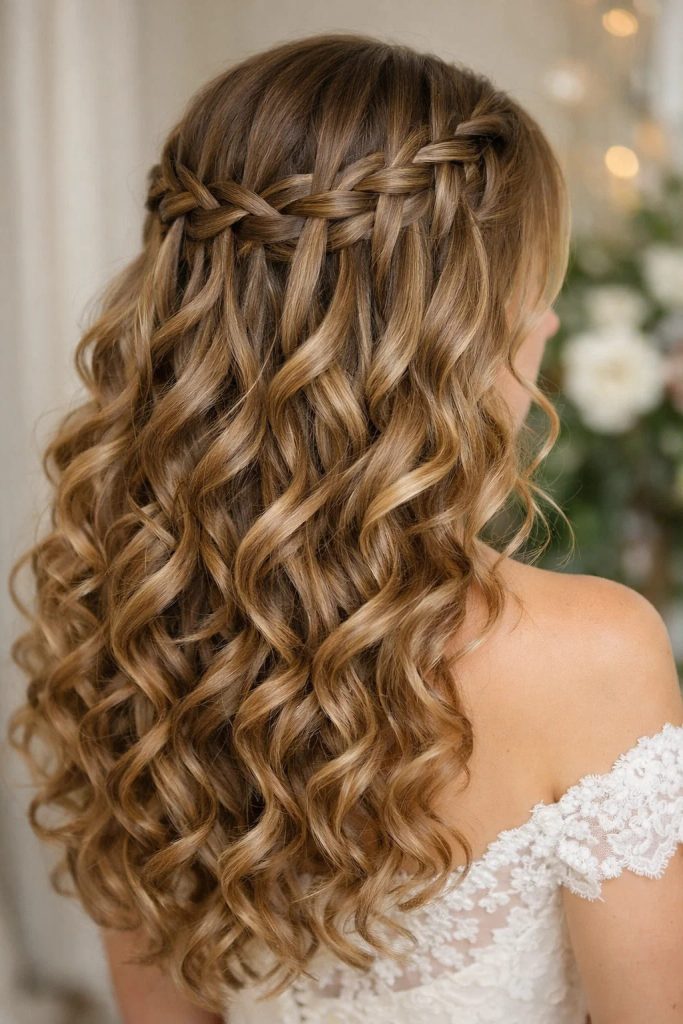
A French braid that lets a strand fall free at every crossover, leaving a cascade through loose curls.
Best on waved or curled hair where the falling strands have shape to show off.
6. The Braided Crown

Two braids wrapped around the head and pinned: the romantic default for weddings, gardens and any golden-hour photo.
Pin with U-pins rather than bobby pins and the crown stays soft instead of scalp-tight.
7. The Loose Side Braid
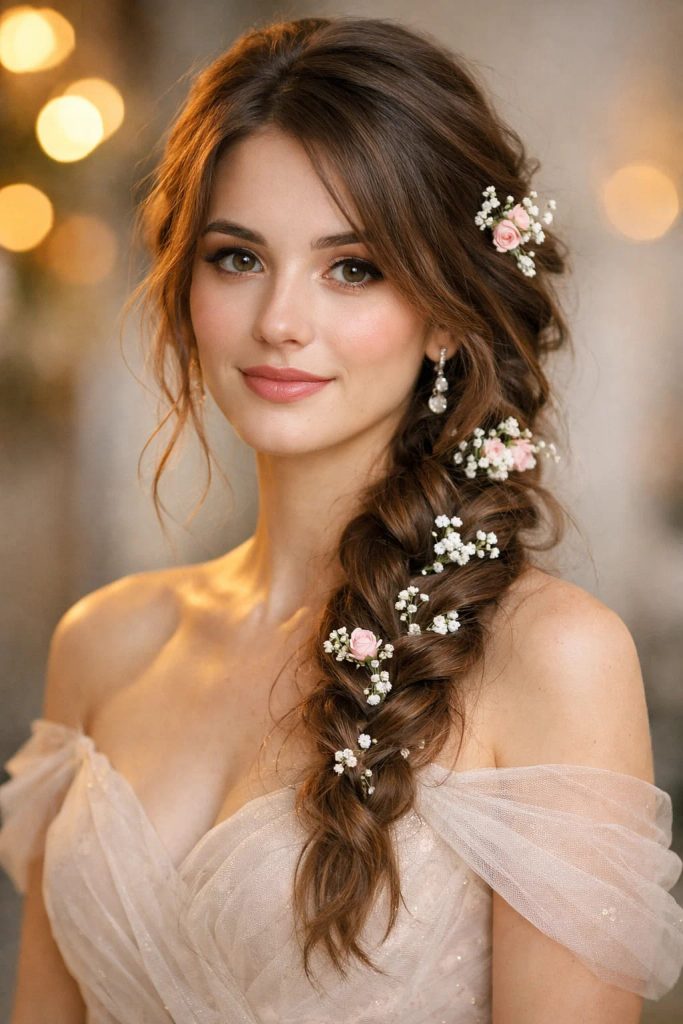
One soft braid over the shoulder, deliberately imperfect, finished by pulling face pieces loose.
This is the five-minute version of romantic. Do not overwork it; the mess is the style.
8. Bubble Braids
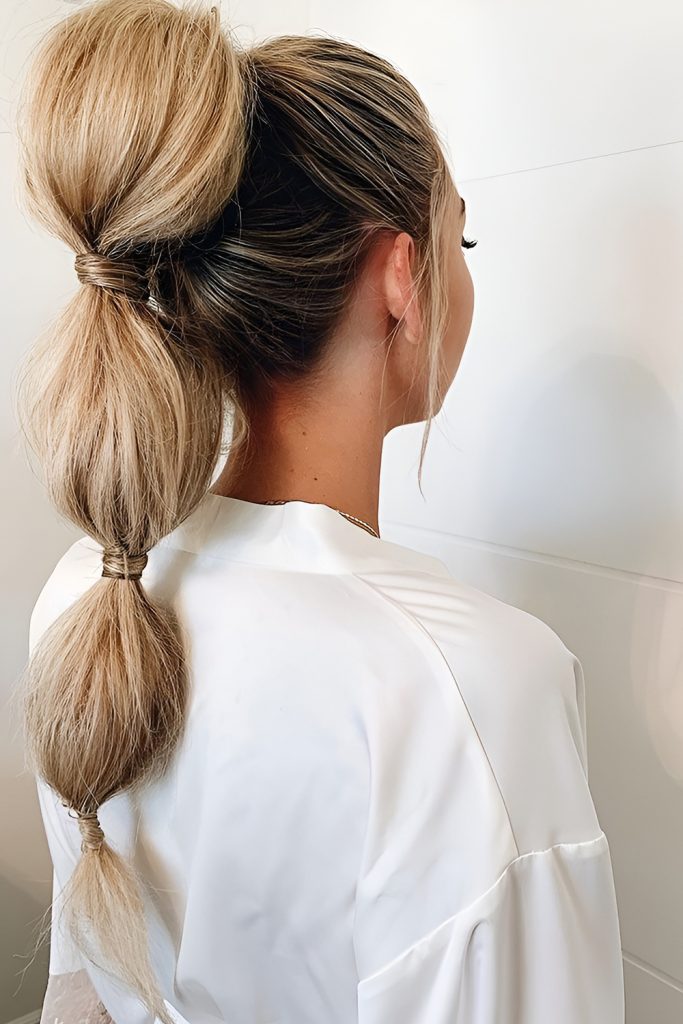
Not technically a braid at all: a ponytail segmented with elastics and puffed into bubbles. Nobody needs to know.
Two minutes, zero skill, maximum playfulness. The perfect entry point for kids’ hair and gym days alike.
9. Box Braids
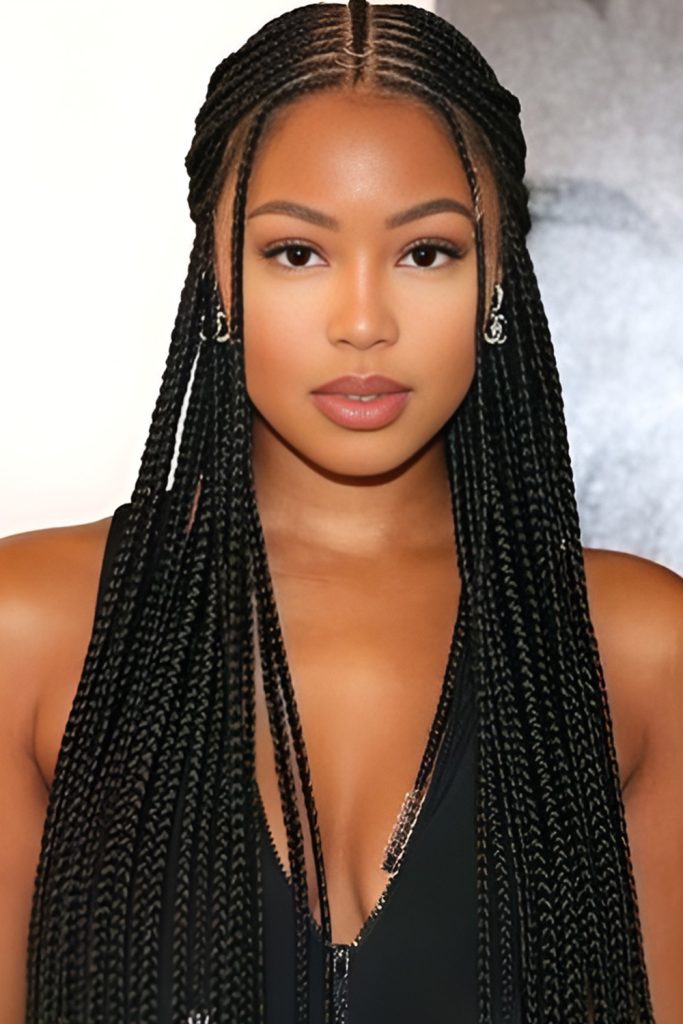
Waist-length box braids with a clean middle part: protective, sculptural and weeks of zero styling once installed.
This is salon or experienced-hands territory, and worth every hour of the install for the month it gives back.
10. Cornrow Braids

Precise rows braided flat to the scalp, a protective style with thousands of pattern possibilities.
Scalp care is the maintenance: light oil along the parts keeps the style comfortable for its full lifespan.
11. The Braided Bun

Braid the ponytail first, then coil and pin: the braid texture turns an ordinary bun architectural.
The rope structure also means it holds without a single loose pin by evening.
12. The Sleek Braided Pony

A snatched high pony with the tail braided to the tip, athletic and editorial at once.
Mist the braid with spray before tying off; sleek versions show every flyaway.
13. The Headband Braid

A single braid running ear to ear along the hairline like a woven headband, with everything else left down.
It reads intricate from the front and takes one French-braid pass in reality.
14. Ribbon Braids

A silk ribbon woven in as a fourth strand, so the braid carries a line of color through every crossover.
Tie the ribbon at the elastic first so it anchors, then treat it as part of the braid. Old-money finish, craft-project effort.
Which Braid Should You Learn First?
Start with the French braid on someone else’s hair or a doll: learning the motion without mirror-reversal builds the muscle memory twice as fast.
Then go Dutch, then fishtail. Those three unlock ninety percent of this list.
And bookmark the bubble braid for the days your arms are tired. It is the braid world’s best-kept shortcut.
Braided Hairstyle Questions, Answered
What is the easiest braid for beginners?
The bubble braid, which needs only elastics, followed by the classic three-strand side braid. The French braid is the first real technique worth practicing, since most other braids build on it.
How do I make my braids look thicker?
Pancake them: after securing, gently tug the outer edges of each section until the braid widens. It can double the visual thickness of any braid in thirty seconds.
Do braids damage your hair?
Loose to medium-tension braids are protective rather than damaging. Damage comes from tension: if a braid pulls at the hairline or gives you a headache, it is too tight, full stop.
How long do braided styles last?
Day styles like fishtails and crowns last one to two days. Installed styles like box braids and cornrows last four to eight weeks with scalp care, which is exactly why they are called protective styles.
Related Post