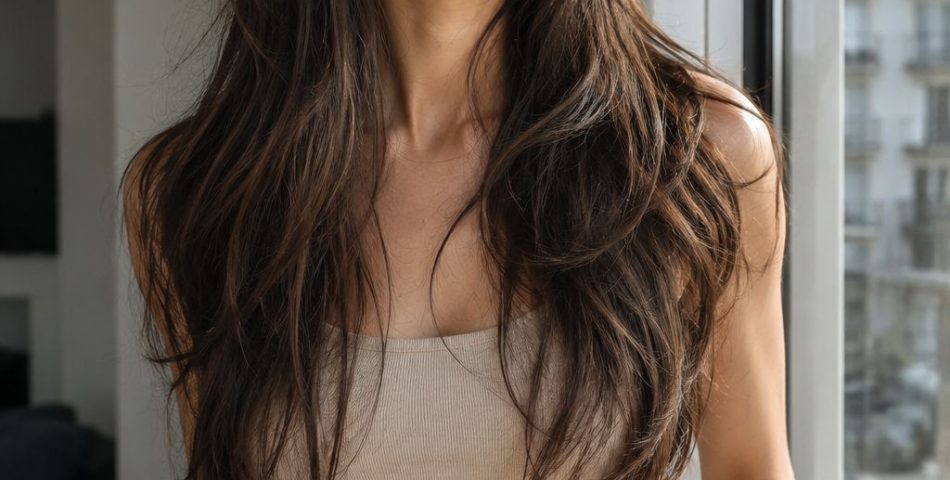
Please note that we do not create all the designs featured in this article. Our primary focus is to curate and collect a diverse range of design collections and products to inspire and share with our audience. While we do not claim ownership or take full credit for the original designs and images, we occasionally make minor adjustments, particularly in home decor and fashion items, to present them more effectively. Additionally, we may produce and edit images to enhance their quality and composition before sharing them on our Pinterest page or website. For the design work we do on these creative designs, we also include our logo on the images shared on Pinterest and our website. This helps our audience recognize that these designs have been published on influencivenews.com
Walk into a salon and say shag, and there is a real chance you leave with a wolf cut. Say wolf cut, and you might leave with a shag. Even stylists blur them, because the two cuts are cousins with the same grandmother: the 1970s rock-and-roll shag.
But they are not the same haircut, and picking the wrong one is the most common reason people say layers do not suit them.
Here is the difference in plain language, and a simple way to know which side of the family you belong to.
What Is a Wolf Cut?
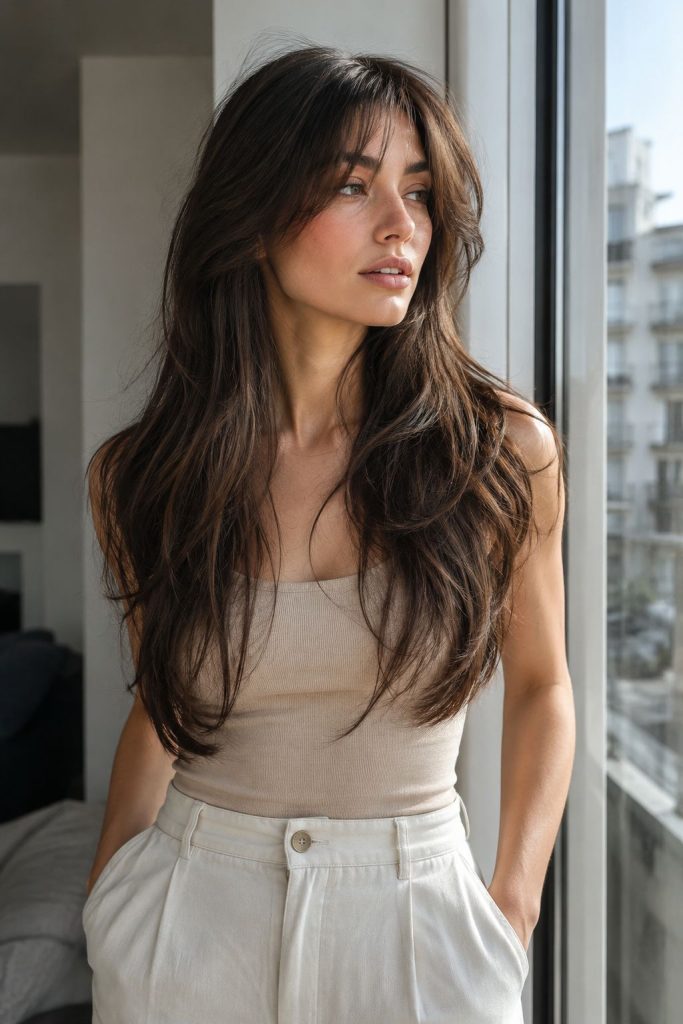
A wolf cut concentrates short, choppy layers at the crown and leaves the length below largely untouched. The result is deliberate contrast: a full, lifted top over long, lived-in ends.
The energy is undone and a little rebellious. The crown does the talking, and the length is the echo.
What Is a Shag?

A shag distributes layers evenly from top to bottom, so every inch of the cut carries texture. There is no dramatic jump, just continuous, feathery movement.
The energy is rock-and-roll uniform: everything choppy, everything moving, no single focal point.
The Structural Difference
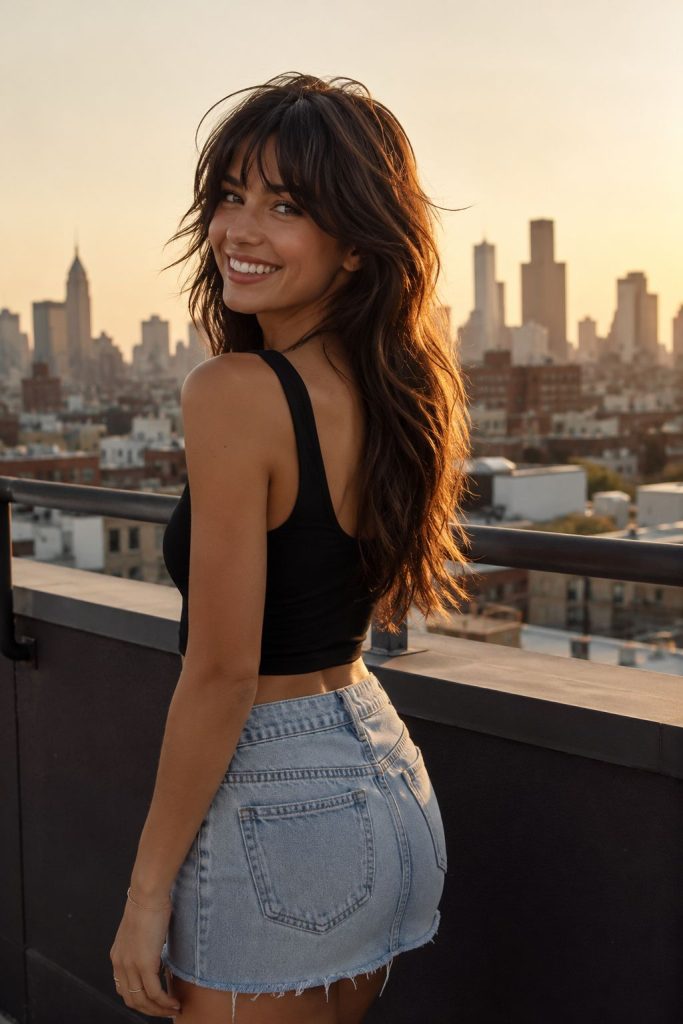
One sentence version: the wolf concentrates its layers, the shag distributes them. That single placement decision changes everything downstream.
The wolf keeps weight and density at the hem, which protects ponytails and fine ends. The shag trades hem density for all-over texture, which is why it can read thin on fine hair but magnificent on thick hair.
It also changes the grow-out. A wolf grows into long layers with no awkward stage; a shag grows out evenly but needs trims to keep its texture from turning shapeless.
Which One Suits Your Hair?
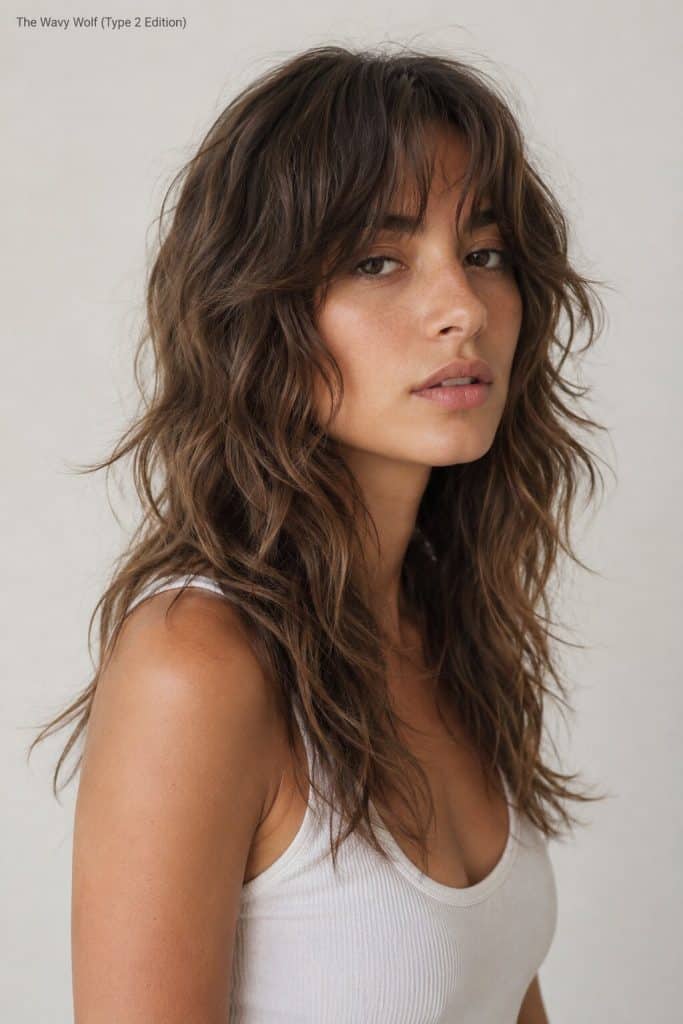
Thick hair wins with either, but the shag removes more total weight, so the thickest heads often prefer it. Fine hair should default to the wolf, whose protected perimeter keeps ends looking dense.
Curly hair takes both beautifully with one rule: dry cutting, always. Straight hair shows the wolf as clean stacked lines and the shag as feathery uniform texture, so the choice is purely aesthetic.
Round faces get more from the wolf’s crown height. Long faces are softened by the shag’s width at the sides. Heart and oval faces can flip a coin.
The Maintenance Reality
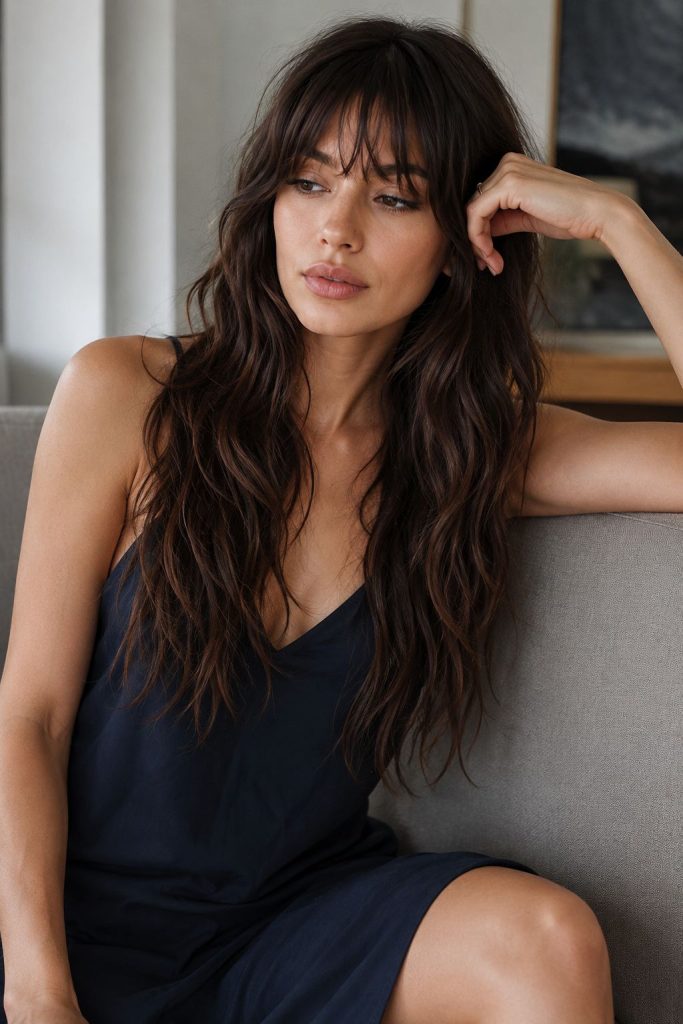
Both are air-dry haircuts, and both look better on day two. The difference is trim cadence: a wolf coasts ten to twelve weeks because its contrast forgives growth, while a shag wants attention every eight to keep its texture crisp.
Product routines are identical: texture spray or light mousse, scrunch, walk away. If your current routine involves a round brush every morning, either cut will feel like retirement.
How to Ask for the Right One
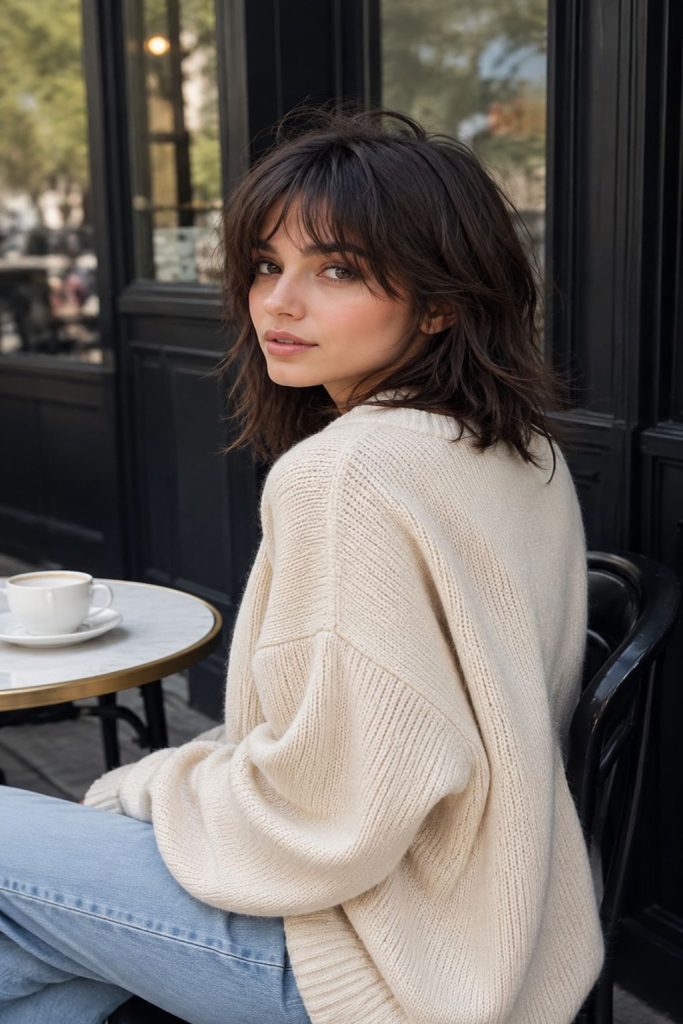
For a wolf: ask for short, choppy layers concentrated at the crown with the length and perimeter left strong. Name the length family you want, from soft to medium to long.
For a shag: ask for even, feathered layering from crown to ends with a strong fringe if you want the classic version.
And in both cases, bring photos. As this entire article proves, the words alone are not safe.
The Verdict
Choose the wolf if you want drama at the crown, a protected hemline, ponytail compatibility and the most forgiving grow-out in modern haircutting.
Choose the shag if you want maximum texture everywhere, have density to spare, and keep a standing salon appointment anyway.
Still torn? Get the wolf. It is the reversible one: a wolf can be evolved into a shag at your next appointment, but a shag needs months of patience before it can become a wolf.
Wolf Cut vs Shag, Answered
Is a wolf cut just a modern shag?
It is a descendant, not a rebrand. The wolf borrowed the shag’s attitude but moved all the layering to the crown and protected the length, which changes how it wears, grows and photographs.
Which is better for fine hair, a wolf cut or a shag?
The wolf, almost always. Its untouched perimeter keeps the ends dense while the crown gains volume. A full shag distributes thinning through the whole cut, which fine hair cannot spare.
Which cut is lower maintenance?
The wolf, by a margin of about a month per year in salon visits. Its contrast forgives grow-out, while a shag needs regular trims to keep its all-over texture from collapsing.
Can I combine a wolf cut and a shag?
Effectively yes: heavier crown layering with moderate mid-length texture is a real request stylists fill daily. The soft wolf on this site is exactly that compromise.
Related Post