Please note that we do not create all the designs featured in this article. Our primary focus is to curate and collect a diverse range of design collections and products to inspire and share with our audience. While we do not claim ownership or take full credit for the original designs and images, we occasionally make minor adjustments, particularly in home decor and fashion items, to present them more effectively. Additionally, we may produce and edit images to enhance their quality and composition before sharing them on our Pinterest page or website. For the design work we do on these creative designs, we also include our logo on the images shared on Pinterest and our website. This helps our audience recognize that these designs have been published on influencivenews.com
Fine hair has a secret nobody says out loud: the amount of hair is rarely the real problem. The problem is a haircut that spreads what you have too thin, literally.
Every cut below uses the same trick from a different direction: concentrate the density where eyes actually look. Get that right and people will swear your hair doubled overnight.
Fine hair has one rule that changes everything: every strand has to earn its keep. The wrong layers make thin hair thinner.
The right cut makes it read twice as dense without a single product.
The good news is that fine hair is actually the easiest hair to wear low maintenance, because the cuts that flatter it most are also the simplest to live with. Blunt lines, strategic volume, nothing wispy at the ends.
These fourteen cuts are the ones stylists reach for when a fine-haired client asks for fullness without a daily blowout commitment.
Color can do half the work too. Babylights and root smudges from our low maintenance fall hair colors guide add visual density with almost no upkeep.
Now the cuts.
1. The Blunt Chin Bob

The single most effective haircut for thin hair, full stop. Cutting every strand to one strong line concentrates all your density at the ends, where thinness shows most.
It air-dries into shape and makes fine hair look deliberate instead of sparse. This is the cut stylists give their own fine-haired clients most often.
Every strand ends on the same line, so all your density stacks at one visible edge. It is the optical illusion stylists reach for first when a client asks for more hair without extensions.
Air-dry it with a drop of smoothing cream. Heat styling is optional, and fine hair will thank you for skipping it.
2. The Fine-Hair Lob with Micro Layers

A collarbone lob with layers so subtle they’re measured in millimeters. The micro layers add bend without stealing density from the ends.
Ask for invisible layers or internal softening, never point-cut ends on fine hair. The perimeter must stay strong.
Micro layers are measured in millimeters, just enough to put a bend in the ends without stealing bulk. The lob length keeps everything swingy instead of stringy.
Refresh every eight to ten weeks. Fine ends show wear faster than thick ones do.
3. Collarbone Blunt with a Bend

One length to the collarbone, worn with a single soft bend at the ends. The bend catches light and doubles perceived thickness.
A two-minute pass with a large-barrel iron once every two or three days maintains it, since fine hair holds a set far longer than thick hair.
One pass of a curling iron at the ends is the entire styling routine, and the bend lasts two full days on fine hair.
It flatters nearly every face shape, which makes it the safest first step away from long, flat layers.
4. Wispy Curtain Bangs on One Length

Fine hair usually can’t spare density for heavy bangs, but wispy curtain bangs need almost nothing and give the whole face a styled frame.
The rest stays one length for maximum fullness. It’s the highest-impact, lowest-cost combination in fine-hair cutting.
See-through bangs give fine hair a focal point without borrowing density from anywhere else. The rest stays one length, so nothing gets thinner.
Bangs need a four-week trim, and most salons do it free between cuts. Styling time is zero because they are meant to look undone.
5. The Crown-Layer-Only Cut

One short hidden layer at the crown for lift, everything else untouched. The layer props up the silhouette where fine hair falls flattest.
From the outside it just looks like your hair has natural body. Root-lift spray on wash day is the only assist it needs.
A single hidden layer at the crown lifts the exact spot where fine hair falls flattest, while everything else keeps its full perimeter.
This is the cut to request if you have been burned by over-layering before. If you hate it, it disappears on its own in eight weeks.
6. The Volume-Top Pixie

A pixie with length and lift kept on top is the boldest fullness play there is: all your density concentrated where everyone looks.
Fine hair is the best pixie hair. It lies clean at the sides and back where thick hair fights the cut, and styling is a fingertip of paste.
Related: 14 Low Maintenance Haircuts for Round Faces That Flatter Instantly
Short back and sides make the top instantly read twice as dense. A pea-sized dab of paste in dry hair is the whole routine.
Shaping every four to five weeks is the trade: more salon visits, zero home effort.
7. The Airy Bixie

The bob-pixie hybrid gives fine hair shape and movement with nothing left long enough to hang thin. It grows out into a bob rather than a shape crisis.
This is the cut for anyone circling short hair but not ready for a full pixie. It flatters almost every face shape.
The bixie rounds out as it grows, so you are never trapped in an awkward stage. It reads fuller than a pixie but needs less shaping.
Rough-dry it upside down, shake it out, and walk away.
8. Shoulder Blunt with Babylights
A strong shoulder-length line plus ultra-fine babylights. The color creates depth-dimension that reads as density, while the blunt cut protects every strand.
The babylights grow out invisibly, as covered in our fall balayage guide. One color visit a season is plenty.
Babylights are not just color. The subtle contrast creates shadow and depth that the eye reads as thickness, and the blunt shoulder line anchors it.
A color refresh twice a year is enough, because the grow-out is designed to be invisible.
9. Ghost Layers
Layers cut only into the interior, completely invisible from the outside. Fine hair gains movement while the perimeter keeps its full, blunt edge.
This is the answer when you want swing without sacrifice. If your stylist doesn’t know the term, ask for internal invisible layering.
Ghost layers live entirely inside the cut. The edge stays blunt while the interior gains movement, which is how stylists give fine hair swing without sacrificing a single visible strand.
Ask for invisible layers by name. A stylist who knows the technique will light up.
10. Chin Bob with a Deep Side Part
The deep side part throws the bulk of your hair across the crown, creating instant asymmetric volume with zero cutting tricks.
Flip the part to the other side on day-two hair and the roots lift all over again. It’s a styling hack built into a haircut.
Flipping your part to the deep side instantly doubles the volume on the heavy side, no product involved. Anchored to a chin bob, it looks editorial instead of accidental.
Switch sides every few months so the roots never train flat.
11. The Health-First Long Trim
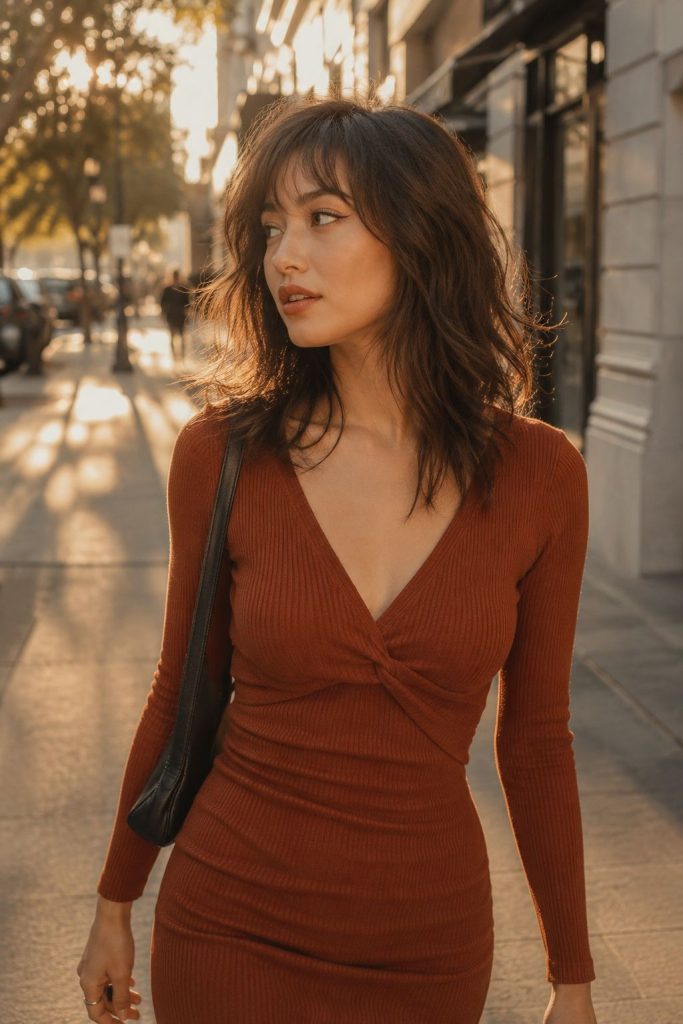
If long hair is non-negotiable, the lowest maintenance move is a disciplined dusting every eight weeks and nothing else. Thin ends read thinner; fresh ends read fuller.
Pair it with the crown layer from number five if you need lift. Otherwise, let length be the statement and keep it immaculate.
If you refuse to lose length, then maintenance becomes the haircut. A precise dust every ten weeks keeps ends dense instead of wispy, and wispy ends are what make long fine hair look thin.
Pair it with a weekly bond-repair mask. Length is only an asset when it shines.
12. The Italian Bob

Fuller and rounder than a French bob, cut just below the jaw with the ends turned slightly under. The rounded shape manufactures volume fine hair doesn’t naturally have.
It holds its silhouette between washes and needs one round-brush pass at most. Very forgiving as it grows.
The Italian bob tucks under at the ends, manufacturing fullness at the jawline, the one place a round brush cannot fake. There is a reason it is the current favorite of every fine-haired editor in Milan.
It holds its shape between six-week trims with nothing but a blast of the dryer.
13. Feathered-End Mid Cut
Soft feathering at the very ends of a mid-length cut adds airiness without wispiness, when it’s done sparingly on the right density.
This is the borderline option: gorgeous on medium-fine hair, risky on very thin hair. A good stylist will tell you honestly which you are.
Feathered ends move, and movement reads as volume in every photo and every breeze. The trick is feathering only the final inch.
Any more than that and fine hair starts to look sparse, so bring this exact description to your appointment.
14. The Shag Lite
A softened shag with half the usual layering, keeping fine hair’s density story intact while borrowing the shag’s cool factor.
Think of it as the shag’s low-commitment cousin. Texture where you can afford it, weight kept where you can’t.
A full shag steals too much density from fine hair, but the shag lite keeps weight at the ends and puts texture only on top. You get the cool-girl silhouette without see-through ends.
A texture spray on second-day hair is your only product.
The Fine-Hair Rules That Make Any Cut Work
Whatever you choose, three rules protect it. Keep the perimeter blunt, put layers inside not outside, and let color do the dimension work your density can’t.
Wash less, dry-shampoo more. Fine hair shows oil first but holds styles longest, which is a maintenance trade in your favor.
And revisit our low maintenance fall hair colors for the shades that add visible thickness. Mushroom bronde and toffee babylights were practically invented for fine hair.
Fine and Thin Hair Questions, Answered
What haircut makes thin hair look thicker?
Blunt, one-length cuts between the chin and collarbone. The harder the bottom line, the denser the hair reads. The blunt chin bob at the top of this list is the strongest version of the trick.
Are layers bad for thin hair?
Visible layers are risky because they thin out the ends. Micro layers, ghost layers and a single crown layer are the safe versions, adding movement while protecting the perimeter.
How often should fine hair be cut?
Every eight to ten weeks. Fine ends wear down faster, and worn ends are what make the whole head look thinner than it is.
Does short hair really make fine hair look fuller?
Yes, because the same amount of hair covers less distance, so density per inch goes up. Chin to shoulder length is the sweet spot before you sacrifice styling options.
Related Post