Please note that we do not create all the designs featured in this article. Our primary focus is to curate and collect a diverse range of design collections and products to inspire and share with our audience. While we do not claim ownership or take full credit for the original designs and images, we occasionally make minor adjustments, particularly in home decor and fashion items, to present them more effectively. Additionally, we may produce and edit images to enhance their quality and composition before sharing them on our Pinterest page or website. For the design work we do on these creative designs, we also include our logo on the images shared on Pinterest and our website. This helps our audience recognize that these designs have been published on influencivenews.com
Ask any stylist which clients complain most about their hair, and the answer is never the ones with fine strands. It is always the thick-haired ones, and the culprit is almost never the hair itself. It is the cut.
Here is the secret the pros know: thick hair does not need more effort. It needs less weight, placed in exactly the right spots. Get that wrong and no product on earth will save your mornings. Get it right and your hair basically styles itself.
Thick hair is the blessing everyone with fine hair wants, and the daily workout nobody warns you about. The drying time, the weight, the way a simple ponytail gives you a headache by noon.
The right haircut changes all of it. Not by cutting your hair short, but by removing the invisible bulk inside the cut, so what’s left moves, dries in half the time, and falls into place on its own.
Every cut on this list was chosen for exactly that. These are the low maintenance haircuts for thick hair that stylists recommend when a client says they love their hair but don’t have time for it.
If you’re also rethinking color this season, our low maintenance fall hair colors guide pairs with every cut here. Now the list.
1. Debulked Long Layers
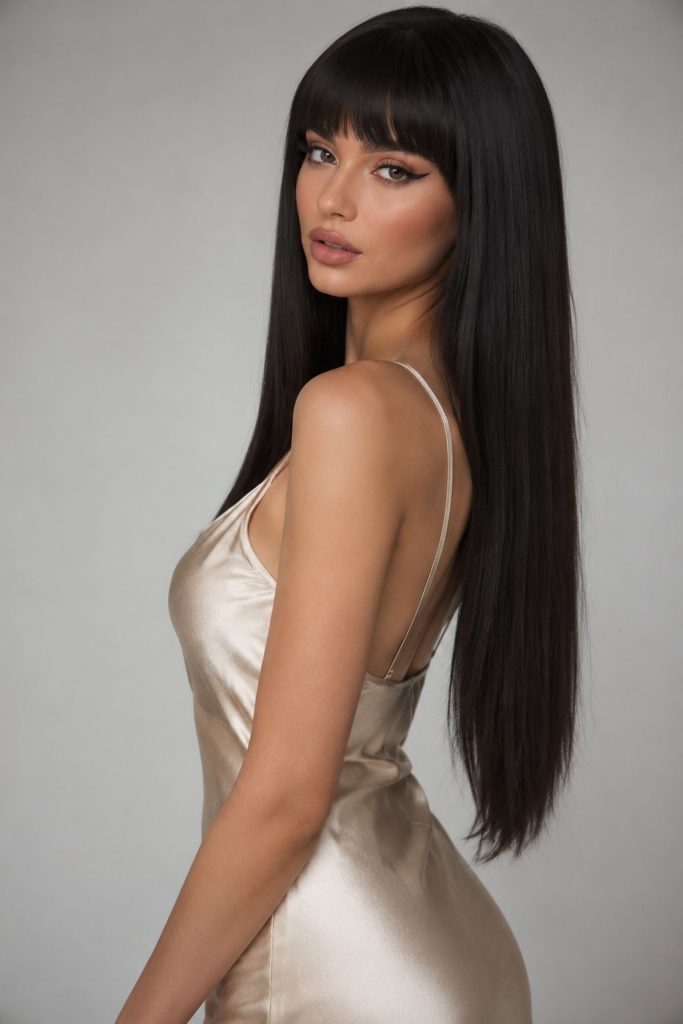
The cornerstone cut for thick hair. Length stays, but your stylist removes interior weight with long internal layers, leaving movement instead of mass.
Ask specifically for weight removal, not thinning shears everywhere. Over-thinning thick hair creates frizz that costs you more styling time, not less.
The magic happens on the inside of the cut, where your stylist removes hidden panels of weight you will never see. From the outside the length barely changes, but the hair suddenly moves like it lost ten pounds.
Ask for internal layers or debulking, never thinning shears all over. Done right, this holds its shape for a full twelve weeks.
2. The Thick-Hair Lob

A collarbone lob takes pounds of weight off while keeping every styling option open. It’s the biggest time-saver per inch sacrificed in all of haircutting.
Thick hair holds a lob’s shape naturally, so it air-dries into place. One pass with a round brush at the face is the entire routine.
The lob works because it lifts the weight off your neck and shoulders while keeping enough length to pull back. Air-dried with a salt spray, it looks intentional by the time you finish your coffee.
Maintenance is one trim every ten to twelve weeks. If your ends start flipping outward, you have waited too long.
3. Blunt Collarbone Cut

Counterintuitive but true: a blunt perimeter can be lower maintenance than layers for some thick hair, because the weight stretches out waves into a smooth, intentional line.
This works best on thick hair that’s straight or barely wavy. The heavier the line, the sleeker the finish without any tools.
A blunt line sounds high maintenance, but on dense hair it is the opposite. The weight of the hair pulls the line straight on its own, no round brush required.
It photographs beautifully sleek, so it suits anyone whose job or feed demands polish without the effort behind it.
4. The Soft Wolf for Thick Hair
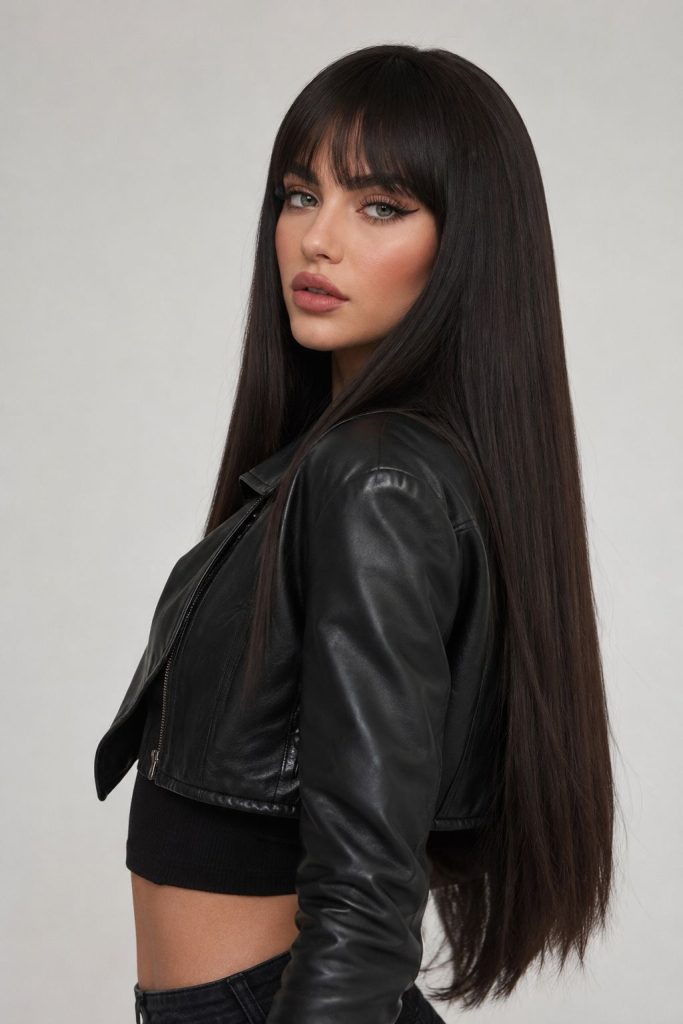
The airy, interior-layered wolf cut breathes life into thick hair while shrinking drying time dramatically. We covered the full family in our soft wolf cuts guide.
The outline stays soft while the inside does the slimming. It’s the trend cut that happens to be a practical decision for thick hair.
The wolf cut was practically invented for thick hair. All that density feeds the layers instead of fighting them, and the crown chops eat the bulk that causes triangle hair.
Scrunch in a light mousse and let it air-dry. The messier it dries, the better it looks, which is the entire point.
5. Curtain Bangs with Long Layers

Curtain bangs give thick hair a focal point that looks styled even when the rest is air-dried. Paired with long layers, the whole cut frames itself.
Thick hair grows bangs out fast, which is normally a curse. Here it’s a feature: the bangs melt into the layers within weeks if you change your mind.
Curtain bangs on thick hair actually behave, unlike on fine hair where they collapse by lunch. The density keeps the swoop in place all day.
They also disguise a grow-out beautifully, so this is the pick if you are growing your layers and need them to look deliberate in the meantime.
6. The One-Length Air-Dry Cut

A single-length cut calibrated to your natural texture, cut slightly shorter where your hair kicks out. The stylist maps the cut to how your hair actually dries.
This is the ask-for-it-by-behavior cut. Tell your stylist you want to wash it, leave the house, and have it look decided by 10am.
Related: 14 Low Maintenance Haircuts for Round Faces That Flatter Instantly
One length, zero layers, cut just above your natural drying pattern. This is the closest thing to a wash-and-wear haircut that exists.
The one rule is the dust trim every eight weeks. Skip two of them and the ends thicken into a heavy triangle.
7. Textured Mid-Length Shag
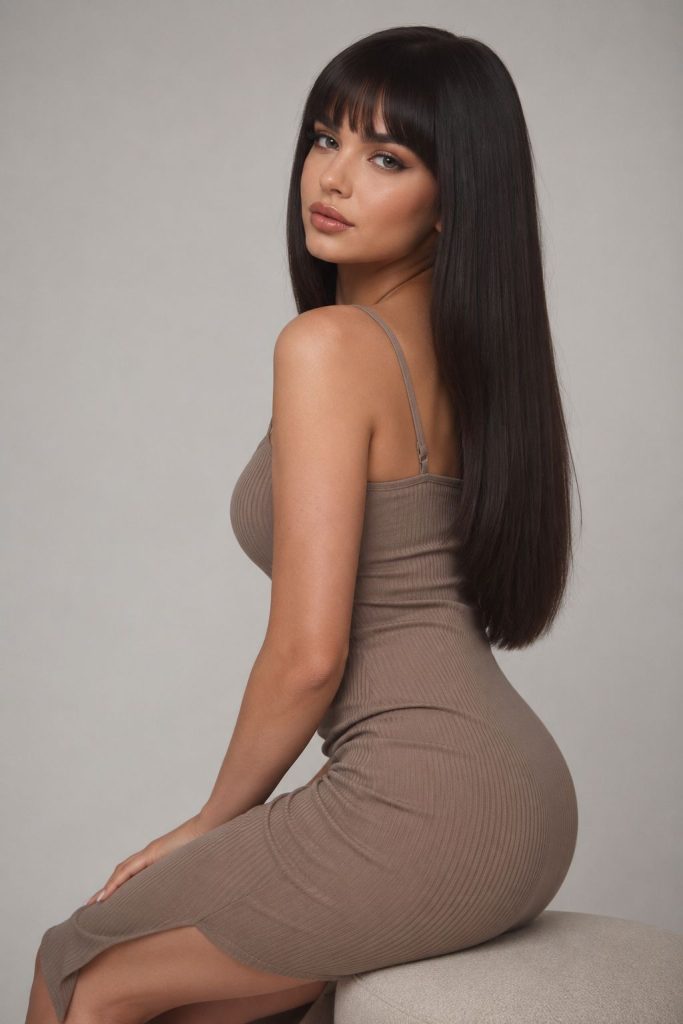
The shag’s choppy layers were made for thick hair, where every layer has enough density to read as intentional rather than sparse.
A palmful of texturizing cream scrunched through damp hair is the entire style. The messier it dries, the better it looks.
Choppy texture removes weight and hides regrowth, which is why the shag remains the queen of low-commitment cuts. Second-day hair genuinely looks better than first-day.
Ask for texture through the mid-lengths only and keep the perimeter strong. That is what separates a modern shag from a 2004 one.
8. Face-Framing Layers Only

Keep the mass one length and layer only the front, cheekbone to collarbone. You get the styled-look payoff where people actually look, at a fraction of the upkeep.
Refresh appointments take twenty minutes because only the frame needs recutting. The rest trims twice a year.
If layers scare you, start here. Everything stays one length except the pieces around your face, which means ten minutes in the chair for an instant change of shape.
It is also the cheapest cut to maintain, since the face frame can be refreshed between full trims.
9. The Invisible Undercut Bob

A chin-to-shoulder bob with a hidden undercut at the nape. From the outside it’s a full, glossy bob; underneath, a quiet section has been removed to kill the bulk.
This is the trick for thick-haired people who overheat in summer and fight ponytail weight year-round. Nobody ever sees it.
The hidden nape undercut removes a shocking amount of bulk while staying completely invisible when your hair is down. Bun devotees report their headaches simply disappearing.
The regrowth hides itself too, so you can stretch appointments to four months without anyone knowing.
10. Butterfly Layers

The butterfly cut’s short upper layers and long under-layers were designed to fake a blowout, and thick hair delivers the volume to sell it.
It looks high-effort and photographs beautifully, but the layers do the lifting. A five-minute rough dry lands where a forty-minute blowout used to.
Butterfly layers fake a professional blowout with nothing but a rough dry and one flick of a round brush at the front. On thick hair the volume holds until day three.
Ask for the shortest layer at chin length or below. Any shorter and dense hair starts to mushroom.
11. The Braid-Proof Long Cut

Long, minimally layered, with the perimeter kept strong so braids and buns hold without pieces escaping. For thick-haired people whose real daily style is up.
The trick is keeping enough weight for structure while debulking just the crown so updos don’t tower. Your hair ties will last twice as long.
Keeping serious length while keeping your sanity comes down to one thing: a strong, even perimeter with minimal interior fuss. Braids, buns and ponytails all sit better on a clean line.
One solid trim per season is honestly enough here.
12. Nineties Blowout Layers

Big, bouncy, off-the-face layers that thick hair carries all day once set. One large round-brush pass or ten minutes in hot rollers lasts until the next wash.
The cut front-loads the effort into one styling session per wash cycle. If you wash twice a week, that’s two styling sessions total.
This is the highest-effort cut on the list per styling session, but you only need to style it twice a week. The layers hold the bend that long on dense hair.
Sleep on a silk pillowcase and day-three hair still looks salon fresh.
13. Rounded Layers for Thick Curls

Thick curly hair needs layers cut in curved sections so the shape builds outward evenly instead of pyramiding. Cut right, wash-and-go becomes literal.
Our curly wolf cut guide covers the edgier version. This one is the round, classic silhouette.
Thick curls need rounded, even layers or they grow outward instead of down. Cut correctly, wash-day styling drops to twenty minutes and mid-week upkeep to zero.
Find a stylist who cuts curls dry. It matters more here than anywhere else on this list.
14. The Low-Layer U-Cut

Long hair with a soft U-shaped back and the barest long layers. The U keeps the ends looking full while quietly removing the heaviest corners.
It’s the minimal-intervention option: one salon visit every four to six months and your hair still reads deliberate.
The U-shape keeps every inch of your length but angles the ends so they never sit in one heavy shelf. It is the invisible upgrade for long-hair loyalists.
From the back it reads instantly healthy, which is why it is the most requested shape for hair-flip photos.
15. The Ponytail-Proof Mid Cut

An armpit-length cut engineered around the up-do: enough length to gather, debulked enough that the tail swings instead of hangs.
If eighty percent of your days end in a ponytail, stop cutting for the twenty percent. This is the honest haircut.
Armpit length is the proven sweet spot: long enough for a full ponytail, short enough that the ponytail never gives you a headache.
If your week is gym, work, repeat, this is the cut that keeps up without asking anything back.
Which Cut Should Thick Hair Actually Choose?
Start from your real routine, not your aspirational one. If you air-dry, prioritize the debulked and one-length cuts.
If you style twice a week, the butterfly and nineties layers give the most payoff per session.
And ask your stylist one question before anything else: where is the weight in my hair, and how do we remove it without frizz? The answer will tell you if you’re in good hands.
For the full seasonal refresh, pair your cut with one of our low maintenance fall hair colors or a fall balayage that grows out as gracefully as these cuts do.
Thick Hair Questions, Answered
How often should thick hair be trimmed?
Every ten to twelve weeks for most cuts on this list. Blunt lines can stretch a little longer, while shags and heavily layered cuts look their best refreshed at the ten-week mark.
Should thick hair be thinned out?
Not with thinning shears all over, which cause frizz and spiky regrowth. Ask for internal layering or debulking instead. It removes weight without wrecking the surface of the hair.
Is long or short hair easier to manage with thick hair?
Collarbone to armpit length is the sweet spot. Very short thick hair needs constant shaping, and very long gets heavy fast. The middle lengths do most of the work for you.
What is the single best low maintenance cut for thick hair?
The debulked long layers at the top of this list. It changes how your hair behaves without changing how it looks, which is exactly what most thick-haired women actually want.
Related Post